How Compliance Analysis Helped Transform Safety Program of One of the Largest Civil Contractors in the Southwest
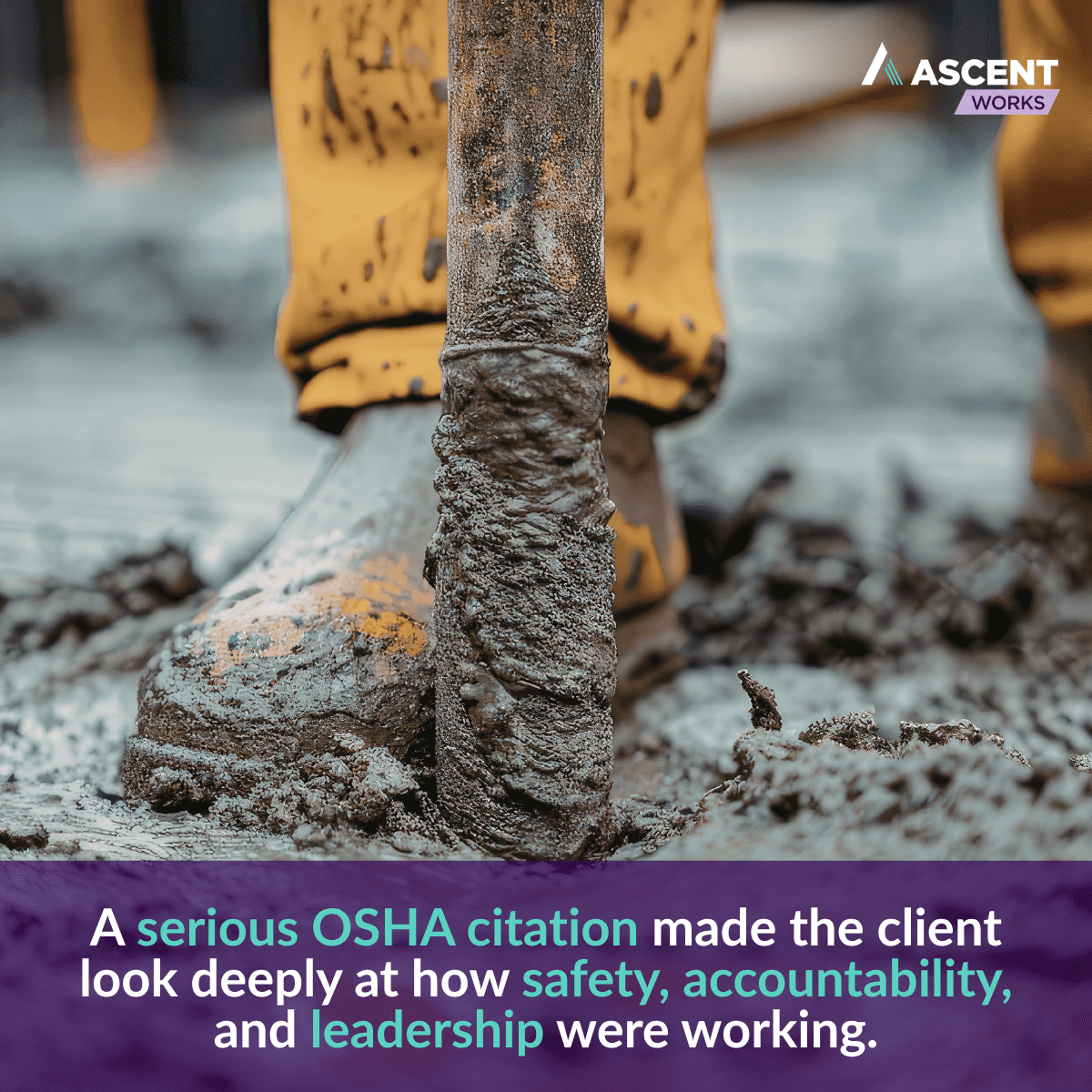
Some construction companies think about safety after an incident occurs. But for an asphalt company, serious OSHA violations became the spark that changed their culture.
The citations made them look deeply at how safety, accountability, and leadership were working.
The asphalt company builds infrastructure projects and works in complex environments.
Their leadership team didn’t see OSHA citations as just a crisis to manage. They saw an opportunity to rethink how safety worked at every level.
There were major violations for confined space work, plus a litany of fines.
His goal wasn’t just to address violations; he wanted to build a system that prevented them. A system where employees looked out for each other because they genuinely cared.
To make that vision a reality, they got introduced to Steve Tusa and the Ascent Works team.
Through that partnership, they discovered the concept of Critical Behavior Observations (CBOs).
CBOs are designed to identify and reinforce safe behaviors in the field.
With Ascent Works guiding the process, the asphalt company team tackled citations successfully. They started transforming the company’s culture from reactive compliance to proactive safety.
Turning a Citation into a Stronger System and Culture
The company’s first priority was clear. They needed to address OSHA citations and meet the settlement agreement requirements.
One of those requirements was to build a formal confined space training program. This was necessary, but leadership knew training alone would not solve the problem.
They wanted to go beyond compliance. They worked to build systems to keep employees engaged, accountable, and safe.
Confined space entry is high-risk work. It requires more than knowing the rules. It requires people to follow them consistently in real conditions.
To do that, the company conducted a full compliance analysis. They looked closely at how safety processes were actually working in the field.
At the same time, leadership focused on improving how supervisors led their crews. They wanted supervisors to take an active role in safety and set clear expectations.
The goal was not just to meet requirements.
It was to build a system where safety and accountability became part of everyday work.
Identifying Opportunities for Improvement Through Compliance Analysis
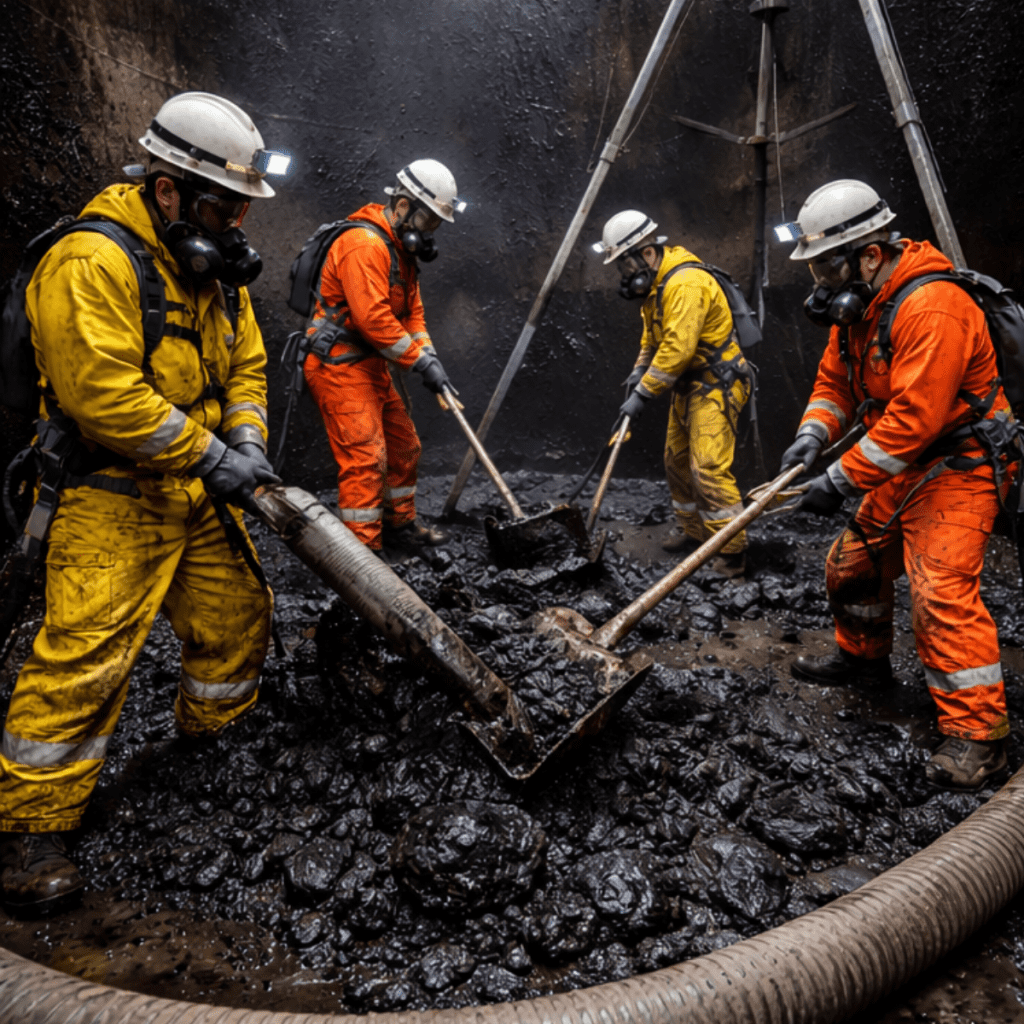
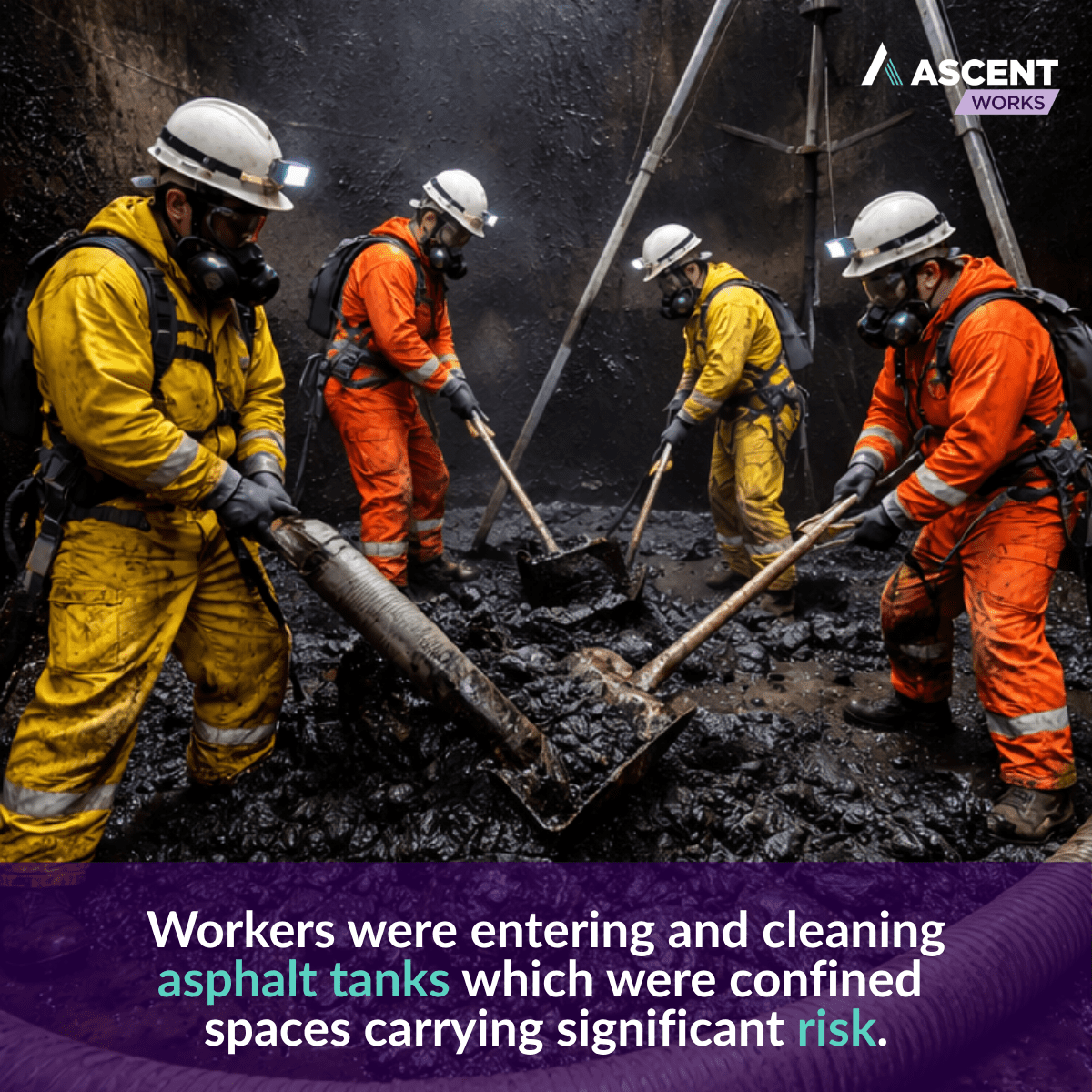
The citation itself was serious, but was only a symptom of a deeper issue. Workers were entering and cleaning asphalt tanks which were confined spaces carrying significant risk:
- People were putting themselves in dangerous situations to get the job done faster
- Workers were taking unnecessary risks
- Supervisors were not consistently engaged in safety decisions
- Accountability systems were unclear or inconsistent
The company wasn’t alone in the challenge. The pressure to keep work moving can overpower safety procedures, often with undesirable outcomes.
Without a structured compliance analysis, breakdowns are hard to recognize. The citation forced leadership to look closely at those gaps.
Safety, Reputation, and the Future of the Business
Solving the problem wasn’t optional. The company was expanding into heavy civil construction projects.
They were starting working on freeway bridges and trenches up to 24 feet deep. The complexity of their work was increasing and so were the risks.
If safety systems didn’t improve, the consequences could include:
- More regulatory penalties
- Serious worker injuries
- Delays on major infrastructure projects
- Damage to the company’s reputation
In an industry built on trust and performance, risks can threaten long-term success.
That’s why leadership chose to transform the problem into an opportunity,
Why They Turned to Ascent Works Risk Advisory
Ascent Works understands both the regulatory environment and the realities of field operations.
The company’s leadership understood that without day-to-day support, addressing risks in a structured, proactive way would be difficult.
So, Ascent Works stepped in as a fractional safety director. The goal was to build safety and compliance systems that helped guide their employees and leadership.
The process began with a structured compliance analysis to clearly identify risks and gaps. The analysis enabled leadership to move forward with a focused and practical plan.
Building a Practical Confined Space Program
The strategy focused on fixing the problem at its root.
The citation required the leadership to create a formal confined space entry program.
They had an opportunity to build a system that worked in the field, not just a regulatory response.
The plan included several key elements:
- Design a written compliance-based entry program
- Create a clear program that defined how workers should safely enter confined spaces
- Create rescue equipment solutions
- Design systems that allowed workers to be safely pulled sideways out of tanks if needed
- Train leaders first
- “Train-the-trainer” approach with supervisors learning the system first and then training their teams
- Build accountability into daily operations
Supervisors were to stay active, and engaged, not just present. At every step, compliance analysis guided their decisions.
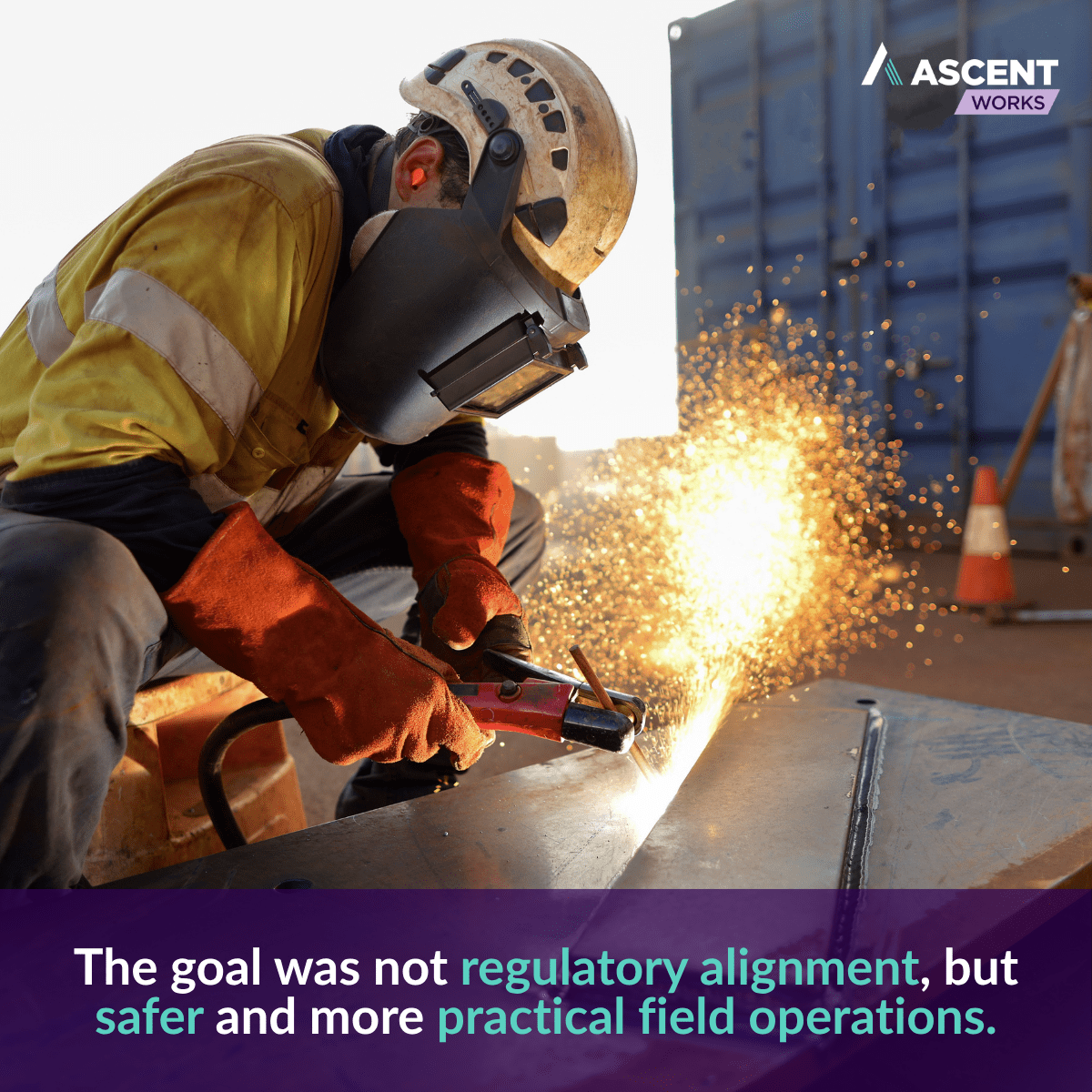
The goal was not regulatory alignment, but safer and more practical field operations.
Transforming a Program into Daily Behavior
Building the compliance response was only the beginning. The real work happened in sustaining the outcomes.
The company’s team decided to proceed with Ascent Works’ SHIELD Framework. SHIELD is a structured approach to strengthen safety culture through daily feedback and accountability.
The company embraced the process fully. More than 100 employees participated in providing feedback every day.
The participation and engagement created a steady stream of real-world insights from the field.
The leadership tracked feedback and safety observations by developing their own internal technology.
The technological advancement allowed supervisors and teams to:
- Document safety observations daily
- Recognize positive behavior
- Address risky behavior quickly
- Track improvement over time
Recognition became a key part of the system. Employees weren’t just corrected when things went wrong. They were also acknowledged when they followed safe procedures or helped others improve.
Consistency was the most important factor. Even when field teams initially pushed back on some changes, leadership worked closely with the team, staying committed to their health and safety.
From Reactive Compliance to Proactive Leadership
The company successfully met the requirements outlined in their OSHA settlement agreement.
Their confined space program addressed the citation. But the peripheral benefits of the program established a clear framework for future operations.
The benefits extended far beyond compliance. Before the project began, safety challenges often appeared as isolated incidents.
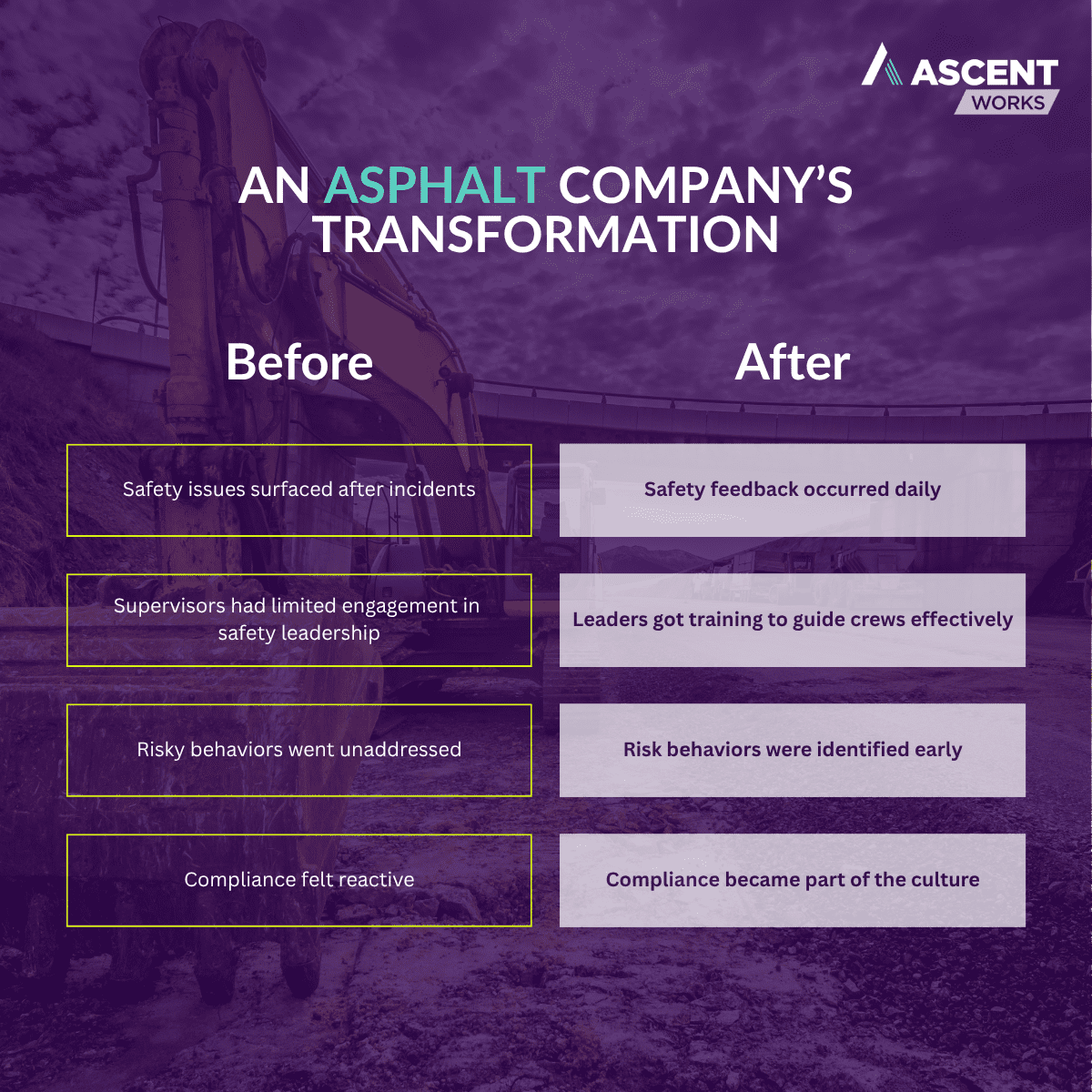
After the transformation, safety became a leadership system. Supervisors were more engaged. Employees had clear expectations. Feedback from the field helped guide decisions.
Instead of reacting to issues, the company began preventing them.
Before:
- Safety issues surfaced after incidents
- Supervisors had inconsistent engagement in safety leadership
- Risky behaviors went unaddressed
- Compliance felt reactive
After:
- Safety feedback occurred daily
- Leaders got training to guide crews effectively
- Risk behaviors were identified early
- Compliance became part of the culture
The company didn’t just resolve a citation. They built a stronger organization.
Not Just Compliance Analysis But Complete Cultural Impact
The company stayed consistent with its safety systems and leadership engagement. The results began to compound year after year.
The whole transformation didn’t include just a compliance analysis. The cultural adaptations and accountability behaviors helped leadership identify risks early. They were able to track progress over time.
The visibility allowed them to make better decisions in both safety and operations.
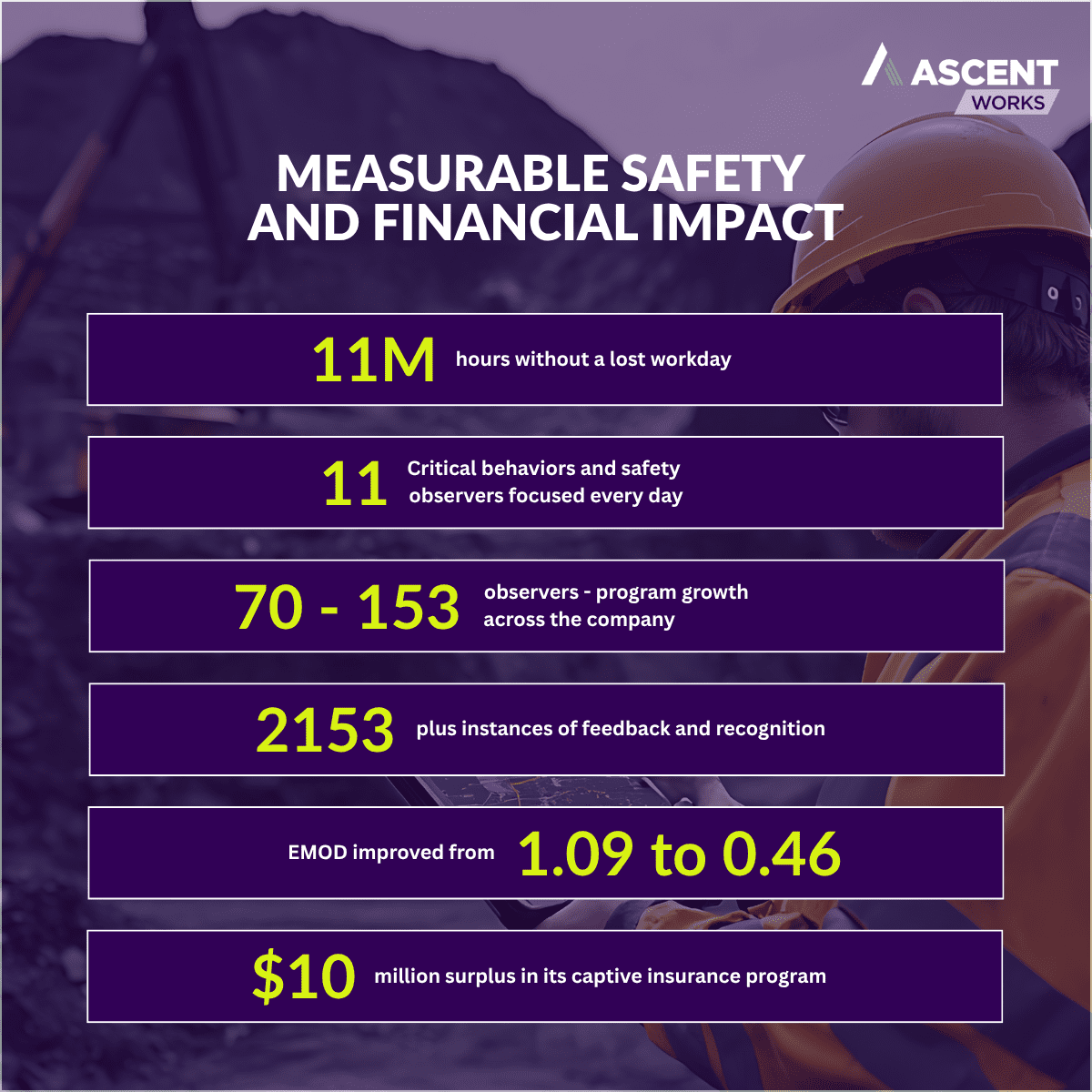
The outcomes were significant:
- 11 million hours without a lost workday.
- Supervisors and safety observers focused on 11 critical behaviors every day. The behaviors helped reinforce safe work habits across crews and job sites.
- In 2016, the program started with 70 observers. By 2026, that number had grown to 153 observers across the company. More observers meant more accountability, more coaching, and more visibility in the field.
- The program recorded more than 2153 instances of feedback and recognition. The program reinforced positive behaviors across teams.
- The company’s EMOD improved from 1.09 to 0.46. The improvement reflected lower claim frequency and stronger safety performance.
- The company built a $10M surplus in its captive insurance program. Those funds created new opportunities to reinvest in the business and their workforce.
Together, the results showed that safety improvements not only protect people. The improvements also strengthen financial performance and long-term business stability.
Compliance Analysis Drives Safer, Stronger Heavy Industrial Businesses
When safety becomes part of the culture, risks go down, trust goes up, and performance follows.
In the end, the asphalt company’s case wasn’t just about compliance. The whole transformation was about building a safer, stronger business for the long term.