
Building Accountability at Work: A Leader’s Guide to Clear Expectations and Ownership
Stop holding people accountable. Start building it.
A senior leader once told me, “We need to start holding people accountable. That will fix the problem.”
I asked him a simple question: “Can you define accountability for me?”
He paused, then said, “It means doing your job.”
That pause told me everything I needed to know.
Let’s get this straight: You can’t hold someone accountable.
At least not in any sustainable way. When leaders say, “do your job,” they make accountability unclear.
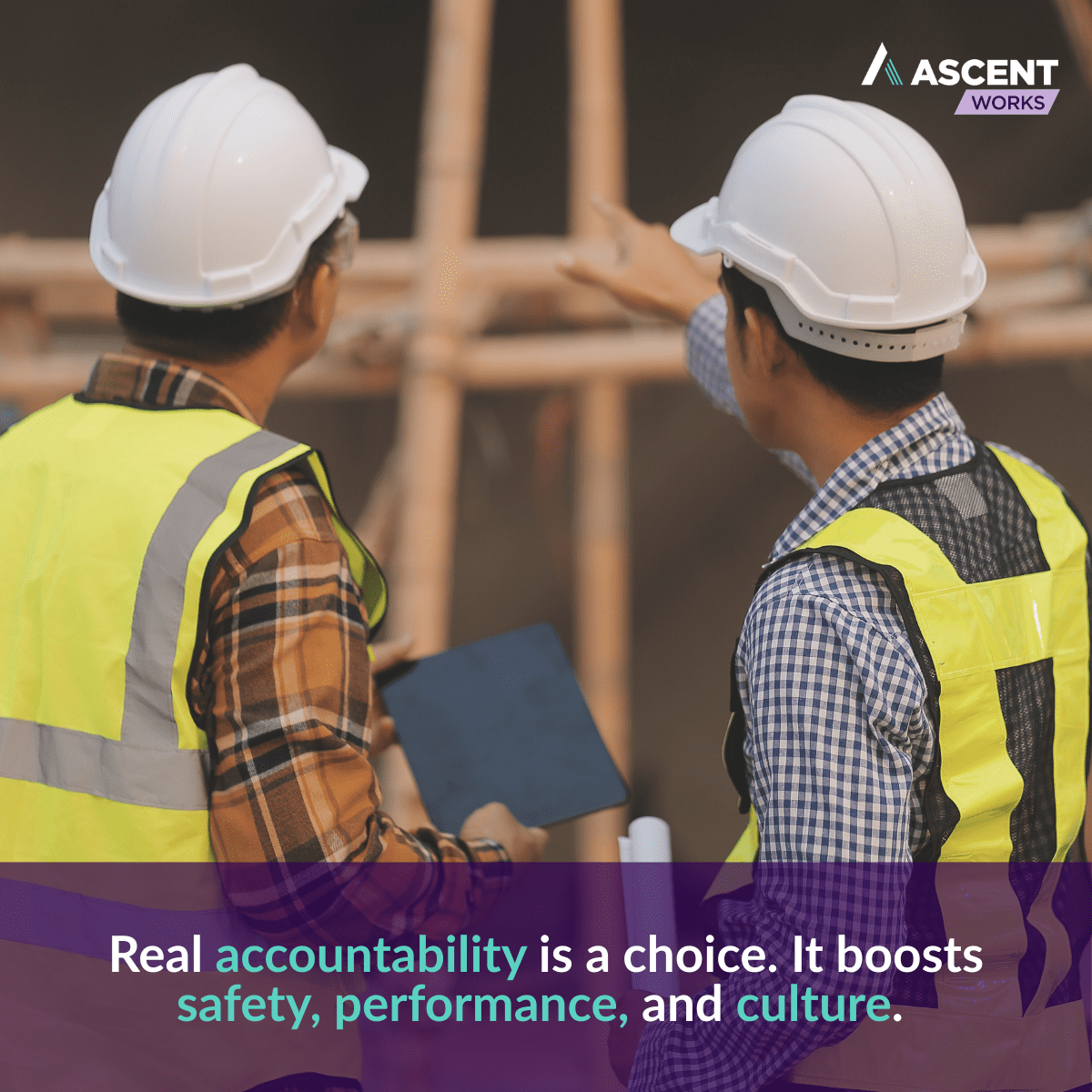
They then use pressure, reminders, and consequences to get results. That may create short-term compliance, but it rarely creates ownership. “Holding” accountability implies control. It feels like dragging someone to a goal they don’t understand, don’t support, or aren’t ready to reach. That’s not leadership; that’s supervision at best and fear-based management at worst. Real accountability is a choice. It boosts safety, performance, and culture. People choose it only when leaders create conditions for accountability.
Why Clarity Is the First and Most Missed Step
Research shows that clarity drives performance. Gallup shows that a key part of engagement is when employees understand their team’s expectations. When expectations are unclear, accountability tends to break down. People cannot own what they cannot see. Leaders in many organizations say things like “be safe,” “be efficient,” or “be accountable.” But they often don’t explain what behaviors lead to those outcomes. It is like asking someone to hit a target they cannot see and then criticizing them for missing. In high-risk areas like manufacturing, healthcare, and energy, unclear communication hurts results. It also makes near misses, incidents, and costly operational failures more likely. McKinsey shows that companies with clear operations and strong systems do better than others. They are more productive and reliable. Clarity is not a “nice-to-have.” Clarity is an act of care.
SHIELD Framework – Rebuilding Accountability
When people understand what’s expected and why it matters, they can step up. This is especially true when they feel supported instead of threatened.
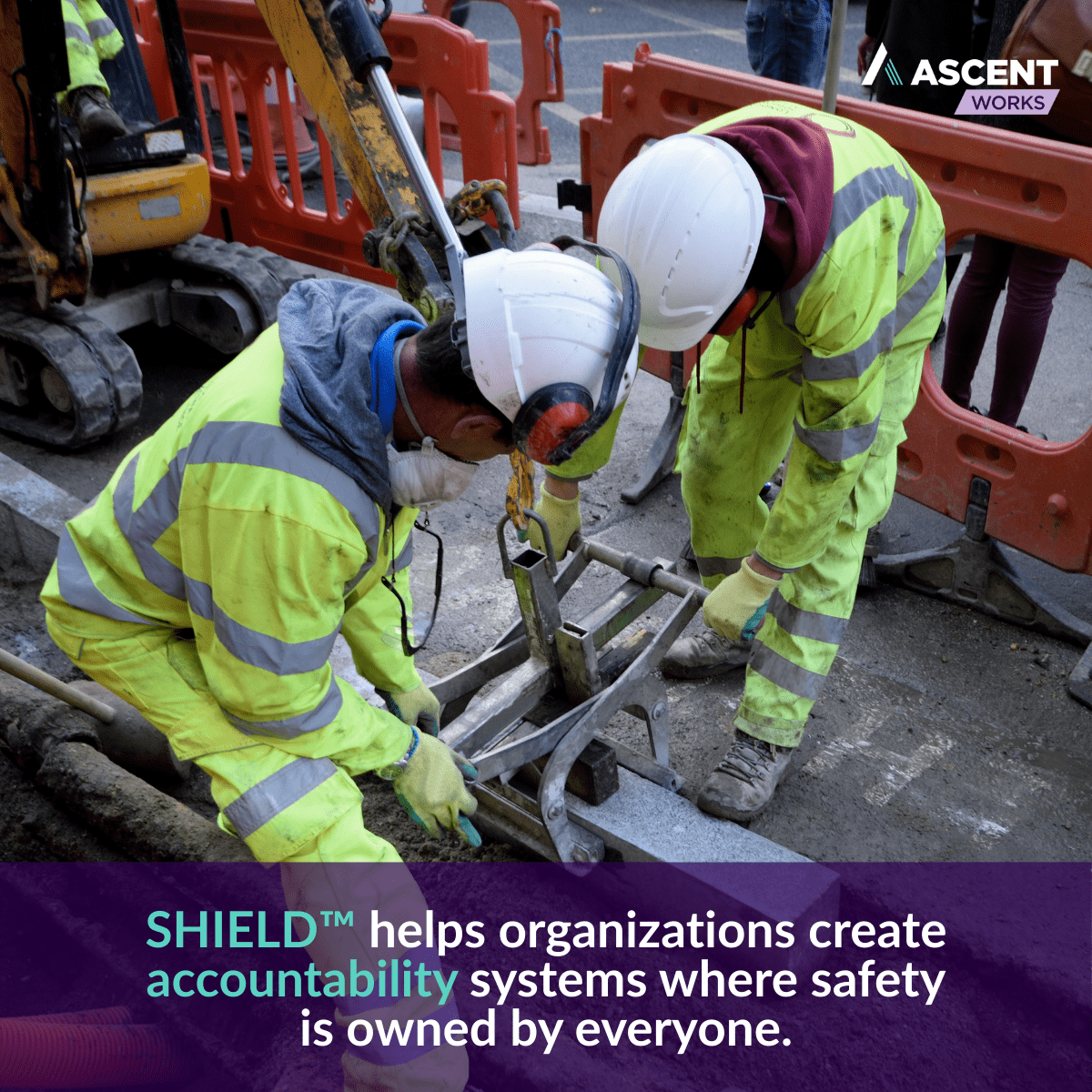
In our SHIELD™ work, we’ve helped hundreds of teams rebuild accountability from the ground up. Not with top-down mandates, but with front-line engagement. SHIELD™ is a leadership-driven framework. It includes 80+ years of real-world experience in construction, manufacturing, and high-risk industries. It helps organizations create accountability systems where safety is owned by everyone.
SHIELD™ strengthens safety culture through five elements:
- Safety & Health: Protect every person so they return home safely.
- Innovation: Listen to frontline teams; they often know the best solutions.
- Engagement: When people feel heard, they take shared ownership of safety.
- Leadership: Equip leaders at every level to set clear expectations and model safe behavior.
- Development: Build habits through continuous learning so that safe actions become the norm.
Together, these elements move safety from rules to daily practice.
What Great Leaders Do Instead
Leaders who build accountability do not rely on slogans or discipline. They design systems that make accountability natural.
Three practices appear in high-performing organizations.
1. Define what matters and the behaviors that support it.
Most organizations define outcomes but fail to define behaviors.
Translate goals like “improving safety” or “increasing efficiency” into clear actions.
- How planners schedule work.
- How they raise risks.
- How handoffs occur, and
- How they document decisions.
HBR found that clear behaviors and expectations improve team alignment and performance. When employees help define these behaviors, ownership rises. Standards feel collaborative instead of imposed, and accountability begins to take root.
2. Measure behaviors at regular intervals, not at random times.
Measurement shapes behavior, but only when it is consistent and transparent. Many organizations measure only results, such as incident counts or production numbers. They ignore the behaviors that actually drive those outcomes. When measurement is inconsistent, accountability feels unfair. When it is predictable and developmental, it becomes feedback instead of judgment. Forbes found that firms improve performance focusing on leading behaviors instead of outcomes. Employees see how their daily actions link to results. This shifts accountability from “catching mistakes” to “reinforcing standards.”
3. Respond with coaching, not punishment.
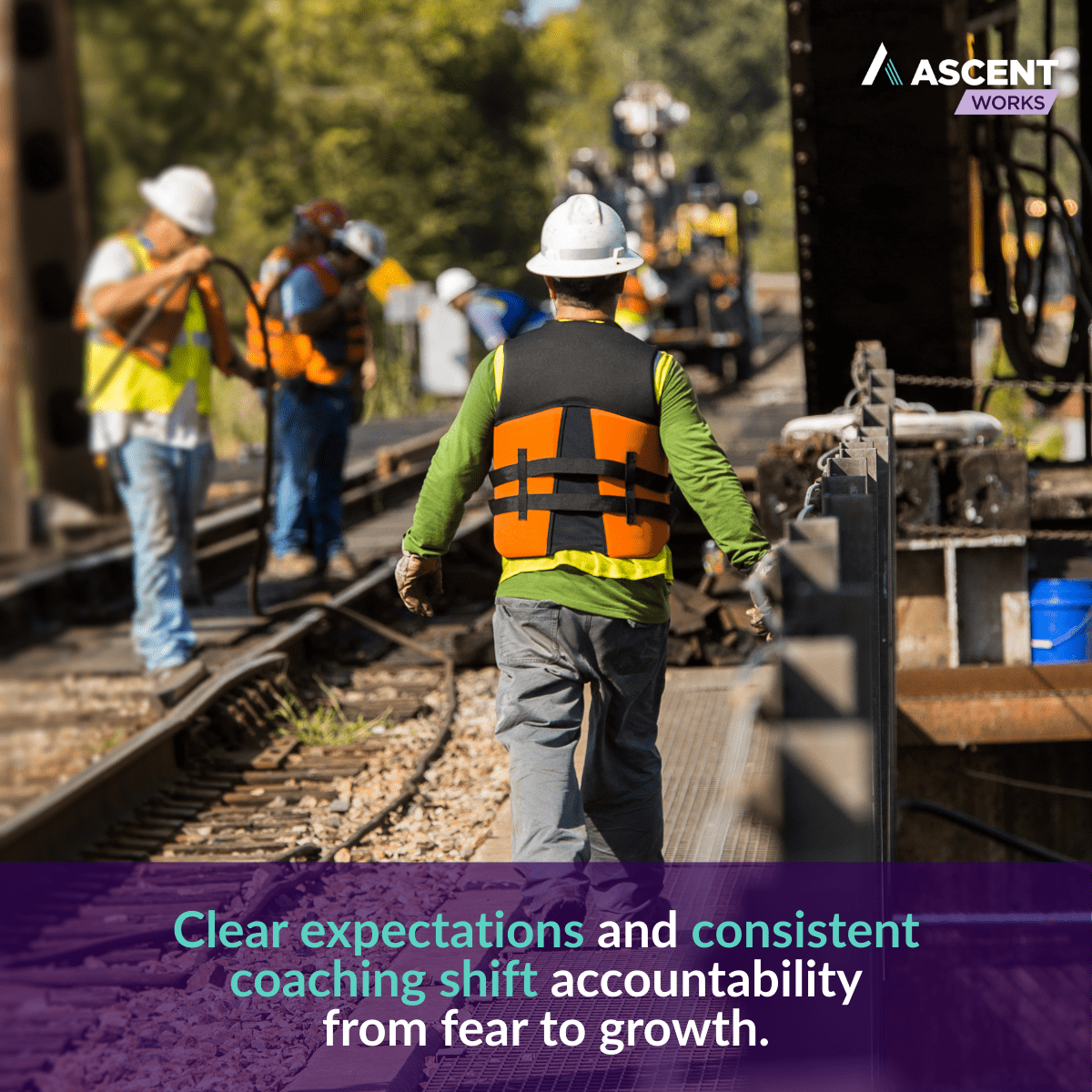
Accountability and discipline are often mixed up. Yet, the best organizations see mistakes as chances to learn first. Psychological safety is the belief that people can speak up. They can admit errors and ask for help without fear. It connects to team learning and performance. You can read more about psychological safety in the Harvard Business Review. This does not mean consequences disappear. It means the first response is coaching and improvement rather than blame. Clear expectations and consistent coaching shift accountability from fear to growth.
Why Accountability Systems Fail So Often
Most leaders are not bad at accountability; they have no training. Managers get promoted for their technical skills, not for developing people systems. They get teams, goals, and pressure. But they don’t learn to create clarity, measurement systems, or feedback loops. In high-stress environments, urgency takes over. Shortcuts appear. Expectations become verbal instead of structured. Over time, clarity fades. Leaders often think the problem is “people,” but it’s about system design. Skipping the foundation rarely saves time. Instead, it creates rework, confusion, turnover, and risk.
The Business Case for Building Accountability
Organizations that build accountability see measurable results. High engagement leads to better productivity, retention, and safety outcomes.

Clear expectations, fair measurement, and consistent coaching help employees exceed minimal performance.
- They take ownership.
- They solve problems earlier.
- They support each other.
The organization spends less time on performance issues and more time building momentum. Accountability, when built correctly, reduces friction instead of creating it.
Accountability is a system, not a personality trait.
One big myth in leadership is that accountability is a personality trait. People either have it or they don’t. Accountability comes from systems. This includes clear expectations, consistent measurement, timely feedback, and supportive leadership. When those systems are strong, accountability becomes a habit. Teams remind each other of standards. Leaders spend less time enforcing rules and more time improving processes. Performance becomes sustainable instead of being dependent on constant supervision.
Build It Right
You do not need to hold people accountable; you need to equip them to be accountable.
Accountability emerges when people:
- Know expectations exactly.
- Understand how to measure success.
- Receive coaching that helps them to improve.
- Feel safe speaking up and learning.
Leaders who build systems for these conditions change accountability. It becomes a framework for excellence instead of a hammer. Once we no longer have to force the culture of accountability, it shows up in how people work every day.
Start Small, Start Now
Building accountability does not need a massive transformation. It begins with a few intentional actions repeated.
- Begin by discussing one key priority with your team. Ask them, “What does success look like in our daily behavior?”
- Write those behaviors down together. When people help define the standard, they understand it faster and follow it.
- Next, create a simple rhythm of follow-up. This does not need complex dashboards. A short weekly check-in that asks,
- What worked?
- What needs support?
- What should we adjust? keeps accountability alive. Consistency matters more than sophistication.
- Finally, recognize the behaviors you want repeated.
Many leaders correct mistakes but overlook the moments when people act as expected. When teams appreciate good behavior, they start to support those standards together. Over time, these small practices create something powerful: shared ownership. Accountability stops being something leaders “push” and becomes something teams “protect.” People speak up earlier, help each other more, and fix problems before they grow. Accountability shifts from policy to culture. It becomes quiet, visible, and a part of daily work. Lead the Climb