Building a Stronger Risk/Safety Culture During a Growth Mode Presents Both Challenges and Opportunities
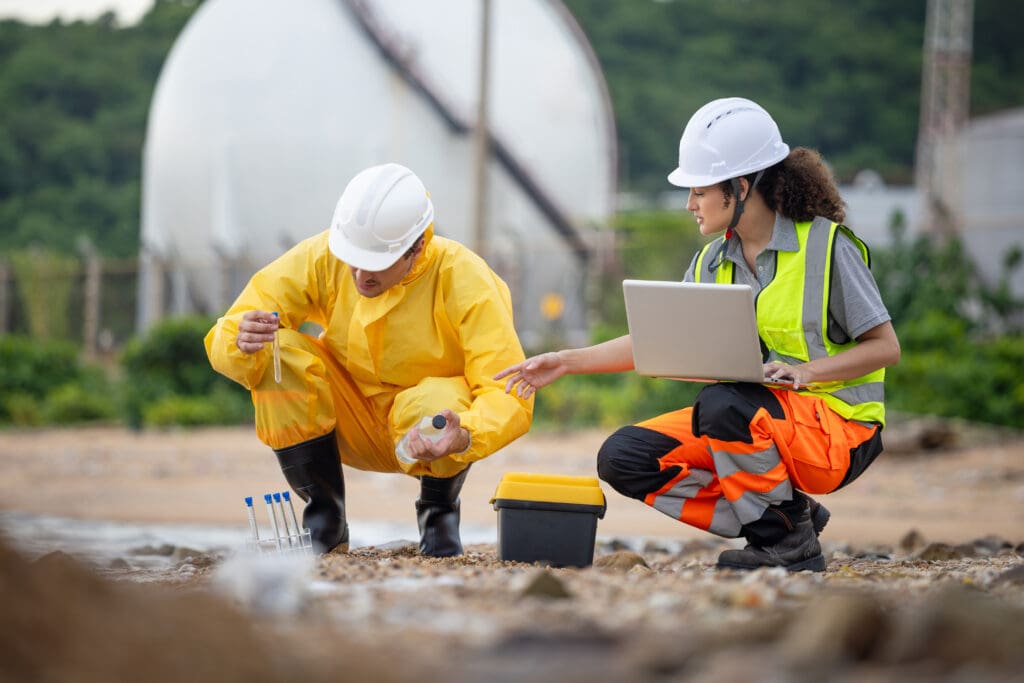
Phoenix Foundation Company, Inc. is a specialty subcontractor focused on deep foundations, earth support, and ground improvement. Much of its work takes place below the ground surface, where equipment, job sites, and changing conditions create significant safety risks.
From the beginning, safety has been a priority.
The company had built its safety program around experienced employees, internal leadership, and support from safety professionals and other partners. That approach helped establish a strong foundation.
But as Phoenix grew, the demands on its team grew, too. More employees, more jobs running at the same time and subsequently, more decisions to make.
Managing safety through spare time and informal support was no longer enough. The company wasn’t responding to a major safety crisis. It was looking for the next opportunity to improve.
“We already had a strong risk and safety culture in place, and knew it was time to invest in more dedicated resources.” – Bob Tonning, President
Phoenix Foundation Company, Inc. wanted to build on its existing safety performance while creating stronger ownership across the workforce.
The goal was to move beyond simply telling people to work safely. The company wanted to help people understand why safety matters and take responsibility for making it part of everyday work.
Turning Safety Expectations Into Everyday Actions
When Phoenix began working with Ascent Works, the first step was to identify the company’s goals for the year ahead.
Rather than applying a fixed program, the teams developed a more customized approach based on Phoenix’s work and specific risks.
For Bob, that flexibility mattered:
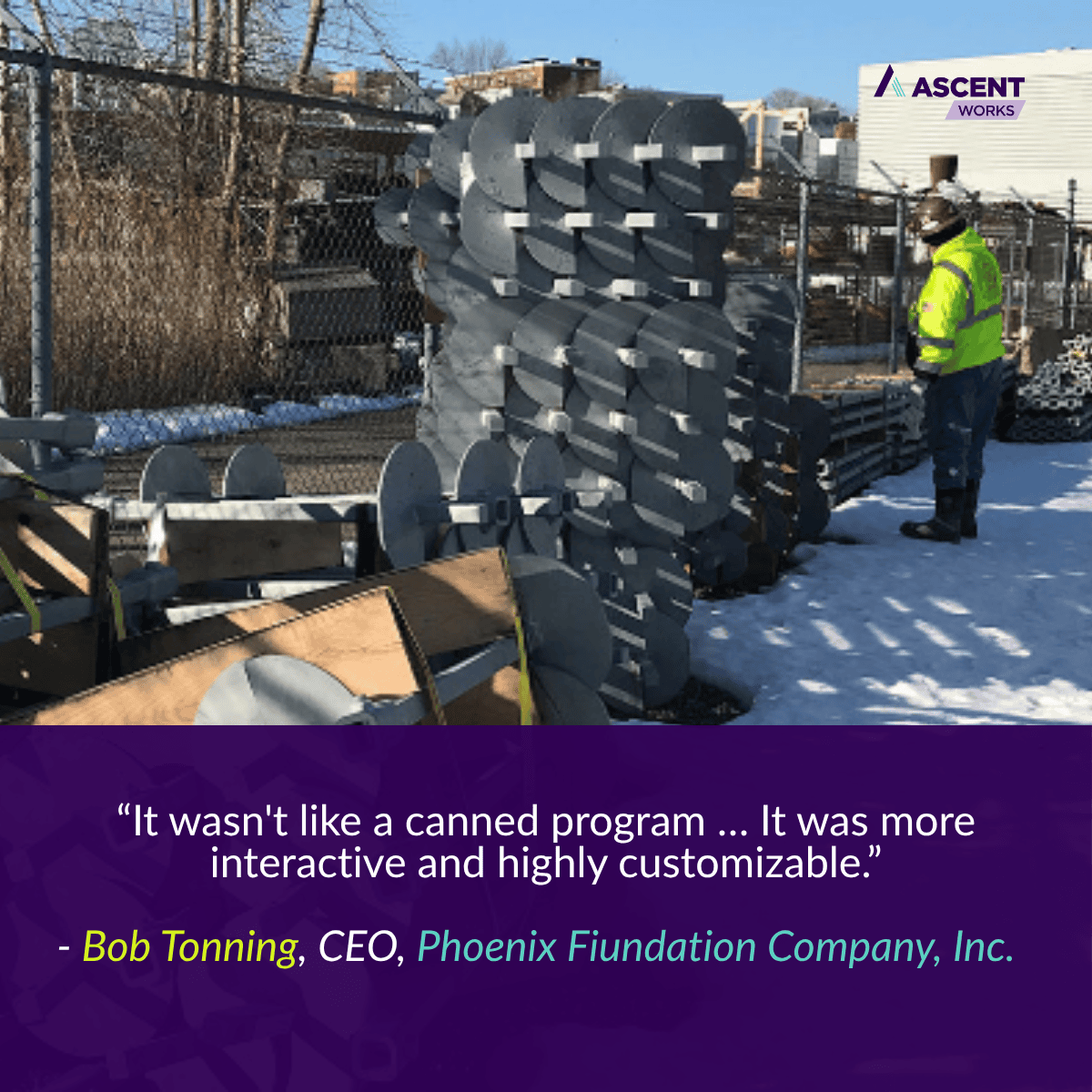
“It wasn’t like a canned program … It was more interactive and highly customizable.”
The work centered on a key question:
How do you get every employee to take ownership of safety?
The approach included several important actions.
1. Build a Culture of Accountability
The goal was to move beyond simply telling employees what to do. Phoenix Foundation wanted its people to understand why safety matters and take ownership of their responsibilities.
The Culture of Accountability approach helped create that mindset. It encouraged employees to see safety as a shared responsibility, not just a set of rules handed down by management.
“It’s not just management saying you have to do these things, it’s having your employees wanting to do those things because they’ve figured out why it’s important for them.” – Bob Tonning
2. Bring field and office teams together
Phoenix Foundation built a design team i.e. safety committee that included people from both the office and the field.
This created space for different perspectives and gave employees a role in shaping the safety program.
3. Turn safety observations into action
Critical Behavior Observations, or CBOs, became part of the company’s approach.
Employees and leaders observed work in the field, documented behaviors, and identified opportunities to improve before a serious incident occurred.
4. Recognize the right behaviors
Safety conversations weren’t limited to identifying mistakes. The team also looked for positive behaviors to recognize. It helped reinforce the actions employees were already taking correctly.
5. Build support from the inside
The team worked to involve employees who were initially skeptical of new initiatives.
Bob described how initially resistant employees became supporters of the program and helped encourage others to participate:
“If you can get them (cave employees) to buy in and if you can get them to own a piece of the plan … they will go out and be your strongest advocates.”
The focus was not simply on introducing new processes. It was on helping employees see safety as something they owned.
Measurable Progress in Safety Performance
Over the course of the engagement, Phoenix Foundation Company, Inc. reported several changes in how safety was managed.
1. More visibility into safety concerns
The company began seeing more reports of smaller issues and concerns.
For Bob, this was a positive sign. Employees were bringing problems to light instead of allowing them to remain hidden. That gave the company more opportunities to learn and take action.
“We can only learn from incidents when we know about them.” – Bob Tonning
A stronger risk and safety culture creates more opportunities to address risks before they become serious problems.
Critical Behavior Observations or CBOs were 79 by the end of July 2026.
The safety committee brought together people from different parts of the organization. Employees at different levels also participated in behavioral observations at job sites.
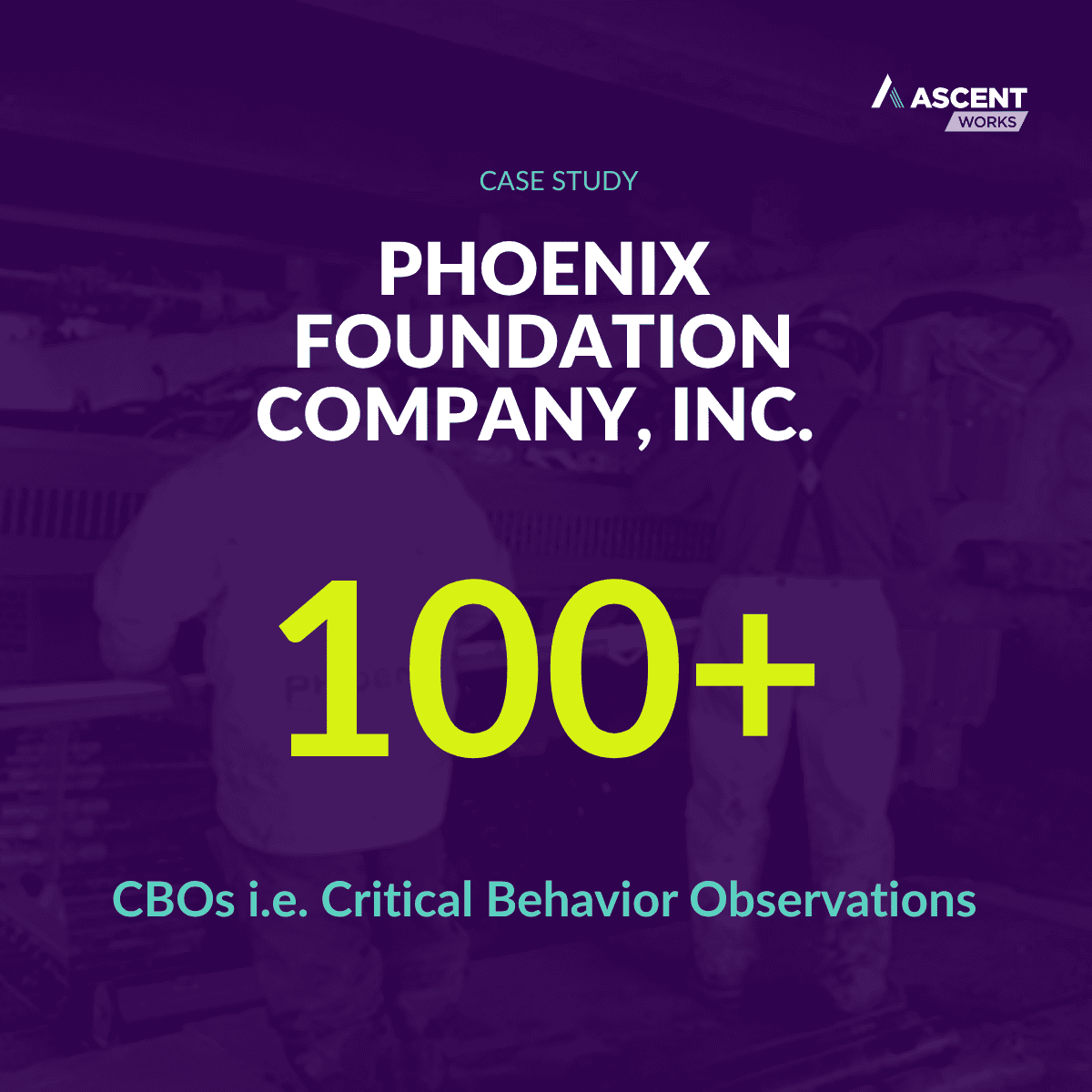
At the time of this writing, Phoenix had completed well over 100 CBOs across dozens of active project sites, representing more than 1,000 critical workforce behaviors being observed and documented in real time. The process helped make safety a shared responsibility rather than something managed only by a few leaders.
2. A shift from reactive to proactive safety management
Instead of relying only on incidents and injuries to identify problems, Phoenix Foundation began using observations to look for risks in advance.
The team could identify behaviors that needed attention, share feedback, and reinforce safe practices in the field.
3. Phoenix Foundation’s Safety Risk Score
Phoenix Foundation’s Safety Risk Score, or SRS, provides a measurable view of progress across several areas of safety management.
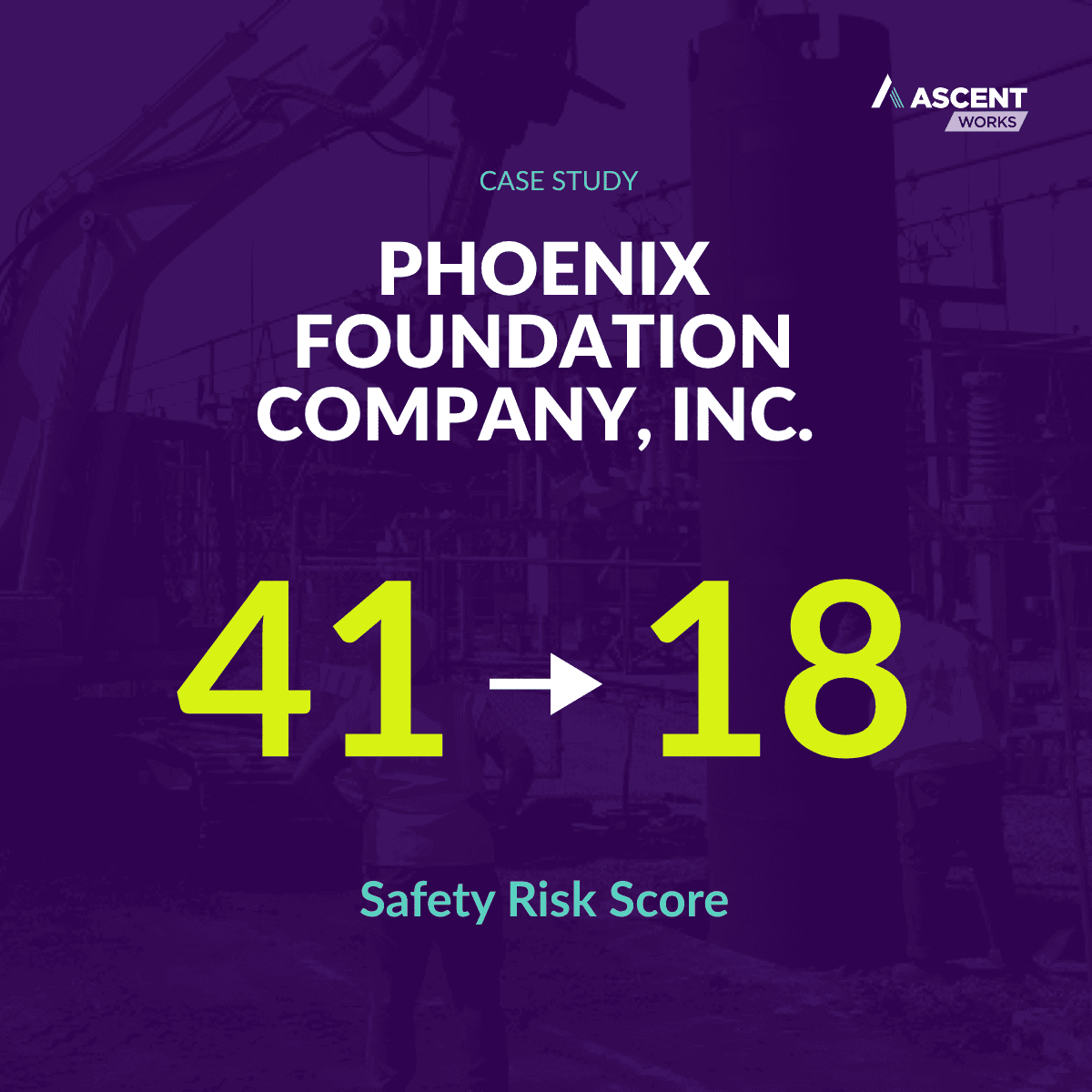
Within a year, the SRS score went from 41 to 18.
The bigger lesson: Safety improvement never stops
The most important outcome wasn’t reaching a particular score. It was building a culture where employees understand their role in safety and continue looking for ways to improve.
“It just means we’re good today, but we can be bad tomorrow if we get lazy.”
Phoenix Foundation Company, Inc. continues to discuss safety every day and look for risks before they become problems.
The experience reinforced an important lesson:
A strong risk and safety culture isn’t something a company completes. It’s something people continue to build, one decision and one observation at a time.
What this means for growing contractors like you
If your company is growing, safety responsibilities can become more complex.
You may already have a safety program in place. You may already have good safety numbers. But as your workforce and job count increase, your existing approach may need to evolve.
The questions worth asking are:
- Are employees actively taking ownership of safety?
- Are potential risks being identified before incidents occur?
- Do field and office teams have a shared role in safety?
- Can your safety program grow with your business?
- Do your leaders have the resources they need to keep improving?
Identify where your safety program stands today and where it needs to go next.